
Umrah – The Lesser Pilgrimage
Umrah, often referred to as the “lesser pilgrimage,” is a significant act of worship for Muslims, performed in the holy city of Makkah. Hajj is obligatory for all eligible Muslims once in their lifetime. Umrah is a voluntary pilgrimage that can be performed at any time of the year. Umrah holds great spiritual merit and is regarded as a means of attaining closeness to Allah, seeking forgiveness, and renewing one’s faith.
Spiritual Importance
Umrah is deeply rooted in Islamic tradition and is considered an act of great virtue. The Prophet Muhammad ﷺ encouraged Muslims to perform Umrah, mentioning that it removes sins and hardships. The journey symbolizes humility, devotion, and the believer’s submission to the will of Allah.
Main Rituals of Umrah
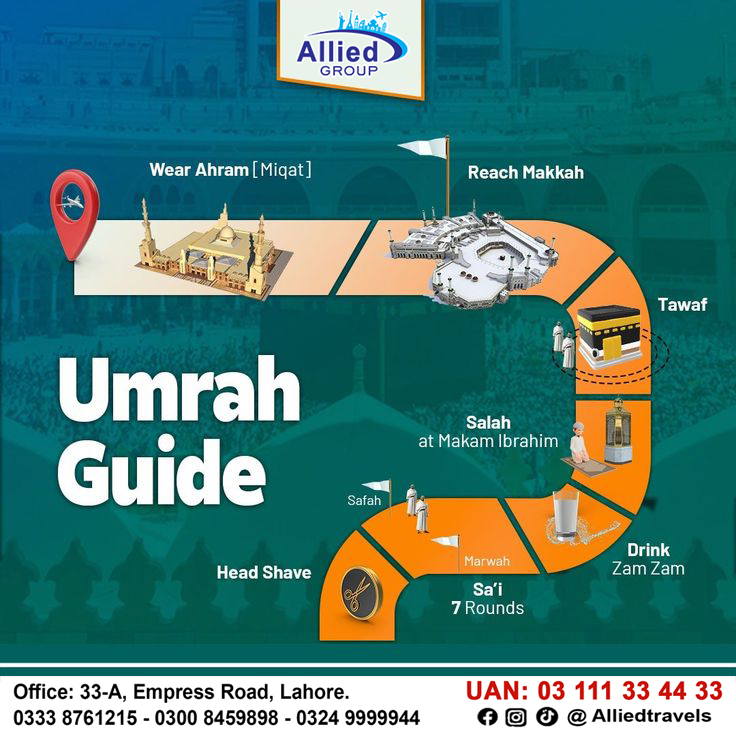
Umrah consists of four essential rituals:
-
Ihram – The pilgrim enters a state of ritual purity and consecration, wearing simple white garments for men and modest dress for women. This state begins before entering Makkah, usually from designated points called Miqat. Pilgrims must abstain from certain actions such as cutting hair, wearing perfume, or engaging in marital relations.
-
Tawaf – This is the act of circumambulating the Kaaba seven times in a counterclockwise direction, starting from the Black Stone (Hajar al-Aswad).
-
Sa’i – Pilgrims walk seven times between the hills of Safa and Marwah, reenacting the search for water by Hajar (Hagar), the wife of Prophet Ibrahim (Abraham), for her infant son Isma’il (Ishmael). This act symbolizes patience, struggle, and trust in Allah’s mercy.
-
Tahallul – To conclude Umrah, men shave their heads or trim their hair, while women cut a small portion of their hair. This signifies spiritual renewal and release from the state of Ihram.
Rewards and Benefits
The rewards of Umrah are immense. Spiritually, it brings peace of mind, deepens one’s connection to Allah, and renews a sense of purpose in life. Many Muslims describe the experience as transformative, inspiring them to live more righteous lives.
Conclusion
Umrah is more than just a set of rituals; it is a profound journey of faith, humility, and devotion. The pilgrimage becomes a source of immense spiritual enrichment and an unforgettable chapter in their lives. Through Umrah, Muslims reaffirm their submission to Allah, seeking His pleasure and mercy, and carrying its blessings long after they return home.

Comment (0)